Common Problems With Growing Tomatoes and Solutions

Tomatoes are one of the most popular plants grown by home gardeners because they are relatively easy to grow and they produce a fruit that has many delicious uses!
Many gardeners who grow tomatoes, however, are frustrated with the progress of their plants. The plant may not set fruit. Or your tomatoes may ripen but have ugly, spongy black spots at the bottom. Worse still, your plants may look great in the evening when you say goodnight to them, but in the morning, they’re skeletons waving empty branches in the breeze.
Before diving into the list, it’s important for you to correctly identify the problem of tomato plant disease. When trying to identify tomato plant diseases, use these steps:
- Identify the affected part of the plant — Is it the tomato itself, the leaves, stems, flowers, or roots?
- Note differences — When you compare your tomato plant to a healthy plant, how does yours differ? For example, a healthy tomato plant has softly fuzzed, medium-green leaves. If the leaves of your plant have brown or black patches, holes, chewed edges, or fuzzy mold growing on them, make a note of that before perusing the list of problems.
- Look for insects — What insects do you see on your plants? If you need help identifying them, take a photo and contact your local Cooperative Extension agent to identify the insects.
----------------------------------------------------------------------------------------------------------------------------

How to Grow Healthy, Productive Vegetables, Herbs, and Flowers either from Seed or Transplanting, Composting, Companion Planting and so much more! Beginners and Experts)
[Download e-book Here: Ddp Gardener's Handbook]
----------------------------------------------------------------------------------------------------------------------------
Here are the most common disease and fungus triggers in tomato plants:
- Not enough fertilizer. (Solution: Test your soil and apply fertilizer as appropriate for the growth stage.)
- Over-pruning. (Solution: Always use a tomato cage and leave enough foliage to shield the fruit.)
- Not enough calcium. (Solution: Test your soil, apply lime and gypsum as needed.)
- Planting before temperatures rise to ideal levels. (Solution: Wait for the right planting time for your Hardiness Zone.)
- Too much water or too little water. (Solution: Water them evenly through the growing season.)
- Watering overhead, which promotes fungal growths. (Solution: Water at the base of the plant. 1 gal water + 1 Tbs baking soda + 2 1/2 Tbs vegetable oil. Shake jug, then add 1/2 tsp of pure castile soap. Pour into a spray bottle. Spray both the top and bottom of leaves as well as the soil around the infected plant.
- Lack of airflow around plants. (Solution: When planting, space tomato plants at an appropriate distance from one another and prune leaves (but not too much, see above) as they grow. Apply fungicide if powdery mildew appears.)
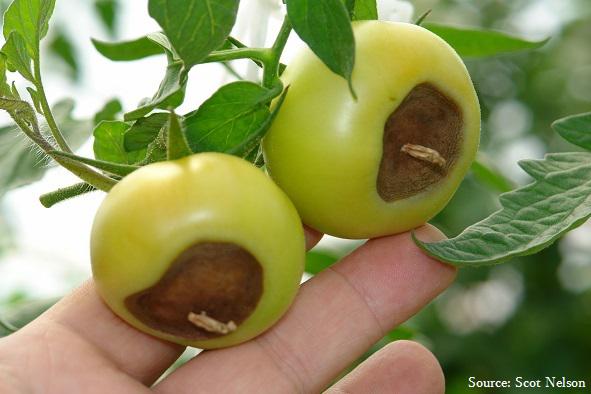
1. Blossom End Rot
- What it looks like: The tomato plants appear healthy, but as the tomatoes ripen, an ugly black patch appears on the bottoms. The black spots on tomatoes look leathery. When you try to cut off the patch to eat the tomato, the fruit inside looks mealy.
- What causes it: Your plants aren’t getting enough calcium. There’s either not enough calcium in the soil, or the pH is too low for the plant to absorb the calcium available. Tomatoes need a soil pH of around 6.5 in order to grow properly. This soil pH level also makes it possible for them to absorb calcium. Uneven watering habits also contribute to this problem. Hot, dry spells tend to exacerbate blossom end rot.
- What to do about it: Before planting tomatoes in the spring, have your local garden center or Cooperative Extension conduct a soil test. Tell them you’ve had problems with blossom end rot in the past, and they will give you recommendations on the amendments to add to your soil. Lime and gypsum may be added for calcium, but they must be added in the proper amounts depending on your soil’s condition. That’s why a soil test is necessary. Adding crushed eggshells to your compost pile can also boost calcium naturally when you add compost to the soil. A foliar spray containing calcium chloride can prevent blossom end rot from developing on tomatoes mid-season. Apply it early in the morning or late in the day — if sprayed onto leaves midday, it can burn them. Water plants regularly at the same time daily to ensure even application of water.
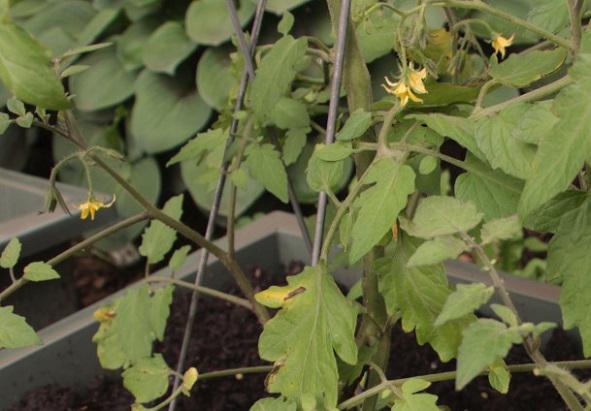
2. Blossom Drop
- What it looks like: Flowers appear on your tomato plants, but they fall off without tomatoes developing.
- What causes it: Temperature fluctuations cause blossom drop. Tomatoes need night temperatures between 55 to 75 degrees F in order to retain their flowers. If the temperatures fall outside this range, a blossom drop occurs. Other reasons for blossom drop on tomatoes are insect damage, lack of water, too much or too little nitrogen, and lack of pollination.
- What to do about it: While you can’t change the weather, you can make sure the rest of the plant is strong by using fertilizer for tomatoes, drawing pollinators by planting milkweed and cosmos and using neem oil insecticides.
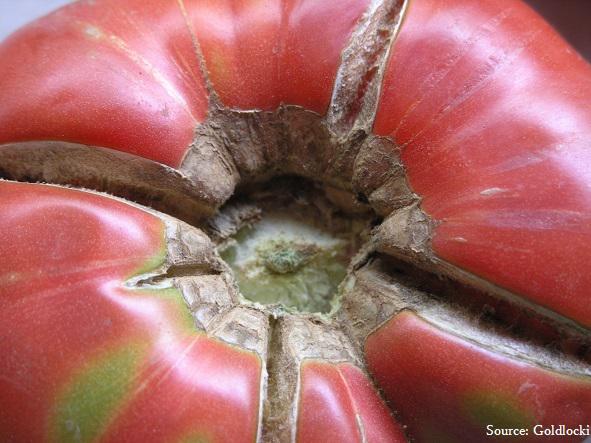
3. Fruit Cracks
- What they look like: Cracks appear on ripe tomatoes, usually in concentric circles. Sometimes insects use the cracks as an opportunity to eat the fruit, or birds attack cracked fruit.
- What causes them: Hot, rainy weather causes fruit to crack. After a long dry spell, tomatoes are thirsty. Plants may take up water rapidly after the first heavy rainfall, which swells the fruit and causes it to crack.
- What to do about them: Although you can’t control the rain, you can water tomatoes evenly during the growing season. This prevents them from being so thirsty that they take up too much rainwater during a heavy downpour.
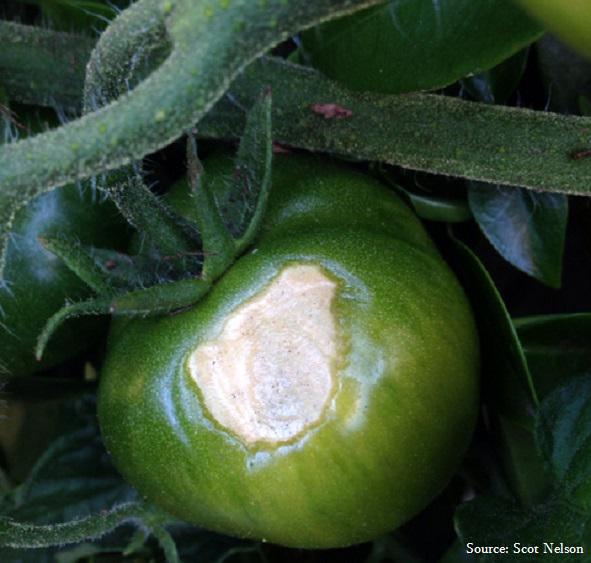
4. Sunscald
- What it looks like: The plants look healthy, and the fruit develops normally. As tomatoes ripen, yellow patches form on the red skin. Yellow patches turn white and paper-thin, creating an unpleasant appearance and poor taste.
- What causes it: As the name implies, the sun’s rays have actually scalded the tomato.
- What to do about it: Tomato cages, or a wire support system that surrounds the plants, give the best branch support while shading the developing tomatoes naturally. Sunscald usually occurs on staked plants that have been too vigorously pruned, exposing many of the tomatoes to the sun’s rays. Leaving some foliage and branches provides shade during the hottest part of the day.
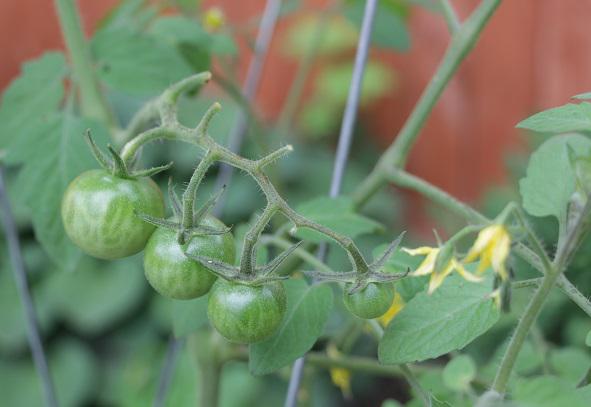
5. Poor Fruit Set
- What it looks like: You have some flowers but not many tomatoes. The tomatoes you do have on the plant are small or tasteless.
- What causes it: Too much nitrogen in the soil encourages plenty of green leaves but not many flowers. If there aren’t enough flowers, there won’t be enough tomatoes. Another cause may be planting tomatoes too closely together. Tomatoes are self-pollinating, meaning that each flower contains both the male (stamens) and female (pistils) parts. Wind typically pollinates tomatoes, but if plants are too close together, the wind can’t reach the flowers.
- What to do about it: Have your soil tested. If you’re planting tomatoes in the spring, leave at least two feet or more between plants so that good air circulation can help pollinate them. If your plants are already in the garden, you can simply shake the flowering branches to simulate wind and get the pollen from the stamens to the pistils.
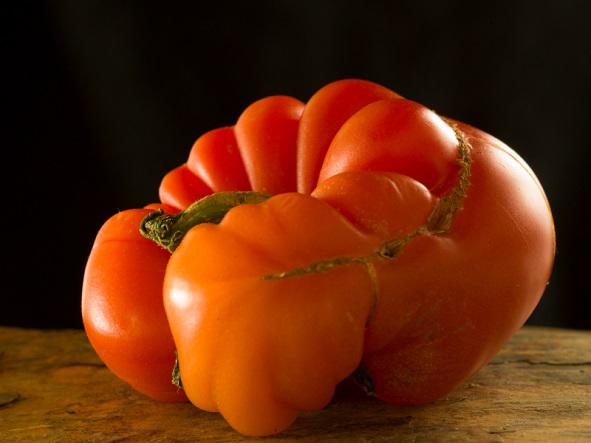
6. Catfacing
- What it looks like: Catfacing makes tomatoes appear deformed. The blossom end is rippled, bumpy, and lumpy.
- What causes it: Plants pollinated during cool evenings, when the temperatures hover around 50 to 55 degrees F, are subject to catfacing. Blossoms fall off when temperatures drop too low. However, if the flower is pollinating before the petals begin to drop off, some stick to the developing tomato. This creates the lumps and bumps typical of catfacing.
- What to do about it: If possible, plant tomatoes a little later in the season. Make sure the weather has truly warmed up enough to support proper tomato development. Devices such as a “Wall of Water” — a circle of water-filled plastic tubes — raise temperatures near the tomato and help keep them high enough on cold nights to prevent cold-related problems. Using a black-plastic spread on the soil can also help. As the plastic heats during the day, it releases the heat back towards the plants at night. Black plastic can be used as a temporary measure until the temperatures warm up enough that it’s no longer needed.
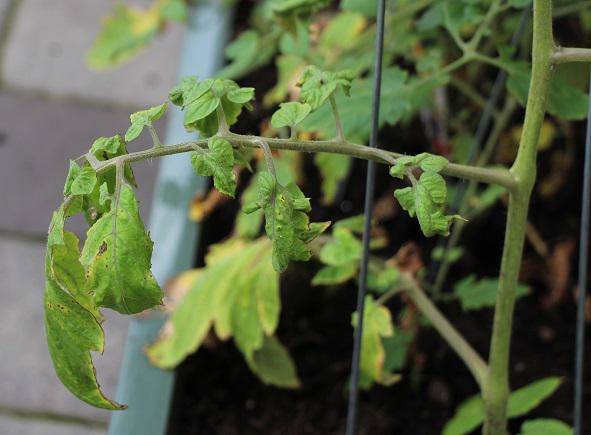
7. Leaf Roll
- What it looks like: Mature tomato plants suddenly curl their leaves, especially older leaves near the bottom. Leaves roll up from the outside towards the center. Sometimes up to 75% of the plant is affected.
- What causes it: High temperatures, wet soil, and too much pruning often result in leaf roll.
- What to do about it: Although it looks ugly, leaf roll won’t affect tomato development, so you will still get edible tomatoes from your plants. Avoid over-pruning and make sure the soil drains excess water away.
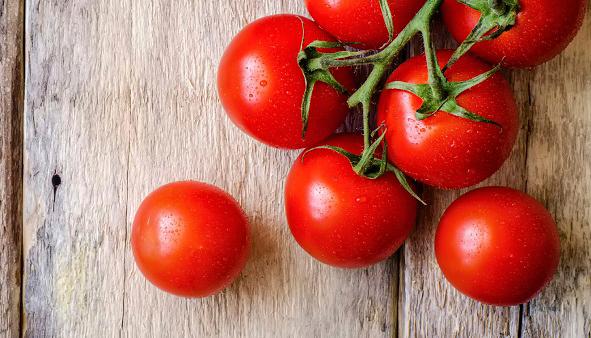
8. Puffiness
- What it looks like: The tomato plants look fine, they bloom according to schedule, and ripe red tomatoes are ready for harvest. When the tomato is sliced, the interior has large, open spaces and not much fruit inside. Tomatoes may feel light when harvested. The exterior of the tomato may have an angular, square-sided look.
- What causes it: Under-fertilization, poor soil nutrition, or inadequate pollination.
- What to do about it: Make sure you are feeding your tomato plants throughout the season. A balanced fertilizer such as a 10-10-10 should be fed biweekly or monthly. Tomatoes are heavy feeders and need fertilizer throughout the growing season. For gardeners, frequent top-dressings with homemade compost and compost teas are a must.
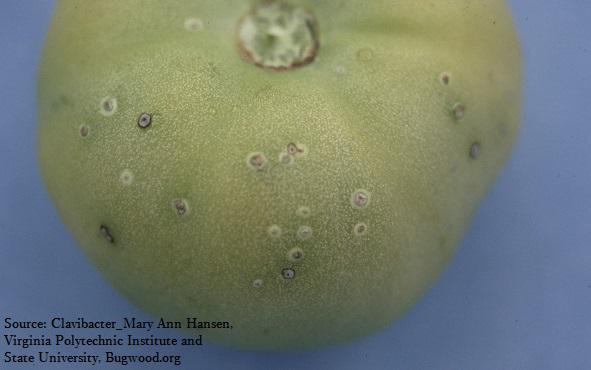
9. Bacterial Canker
- What it looks like: Often confused with cloudy spot disease, bacterial cankers start as yellow dots on ripening red tomatoes. If you look carefully at the spots — using a magnifying glass if you have one — you’ll see a dark, birds-eye-type rim around each of the yellowed spots. This is what distinguishes bacterial canker from cloudy spot disease.
- What causes it: A bacteria called Clavibacter michiganensis. The bacteria occur naturally but can be brought into the garden on infected plants or tools. Once it gets into the soil, rainwater splashes it up onto the plants. If there’s an open sore, such as insect damage or a leaf missing from pruning, it can enter the plant and infest it.
- What to do about it: Remove the infected plants immediately and do not plant tomatoes again in that soil for at least three years. Rotate your crops regularly to prevent these and other diseases from taking hold in the soil. Don’t compost the dead plants — instead, put them in the trash to avoid spreading the bacteria.
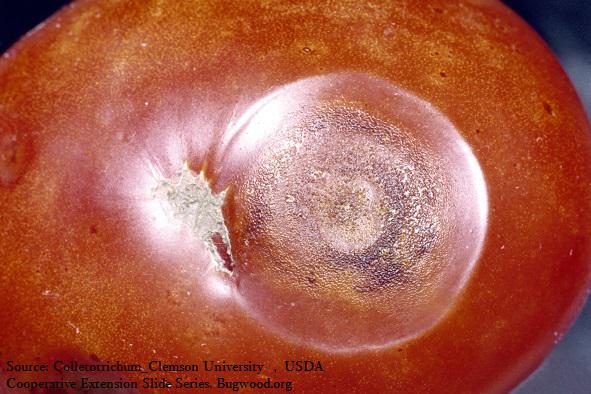
10. Anthracnose
- What it looks like: As tomatoes ripen, a dark, bull’s-eye circle appears on the blossom end or bottom of the tomato. The spot is sunken and mushy to the touch. When you slice into the tomato, there’s a black mushy spot underneath that looks like rot.
- What causes it: A fungus called Colletotrichum phomoides. The fungus loves hot, moist weather and is often spread by overhead irrigation, sprinklers striking infected soil, and splashing the fungus up onto the plants, and infected plants.
- What to do about it: Switch your watering methods so water drips on the roots, not the leaves of the plants. Harvest tomatoes when ripe, since overly ripe tomatoes tend to contract the fungus more than tomatoes in the early stages of ripening.
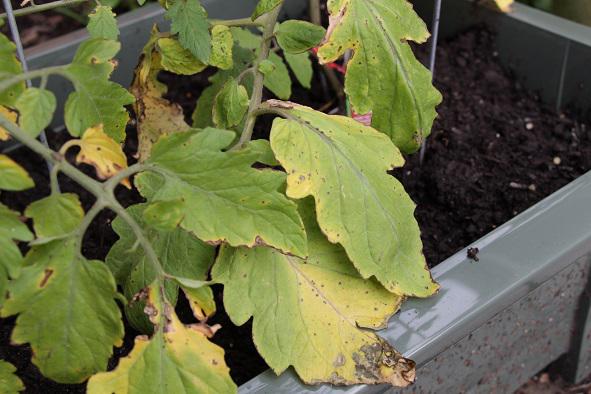
11. Early Blight
- What it looks like: You’ll find brown spots on tomato leaves, starting with the older ones. Each spot starts to develop rings, like a target. Leaves turn yellow around the brown spots, then the entire leaf turns brown and falls off. Eventually, the plant may have few, if any, leaves.
- What causes it: A fungus called Alternaria solani. This fungus can live in the soil over the winter, so if your plants have had problems before like this, and you’ve planted tomatoes in the exact same spot, chances are good the same thing will happen to your plants this year.
- What to do about it: Crop rotation prevents new plants from contracting the disease. Avoid planting tomatoes, eggplants, or peppers in the same spot each year as these can all be infected with early blight. An organic garden fungicide can treat infected plants.
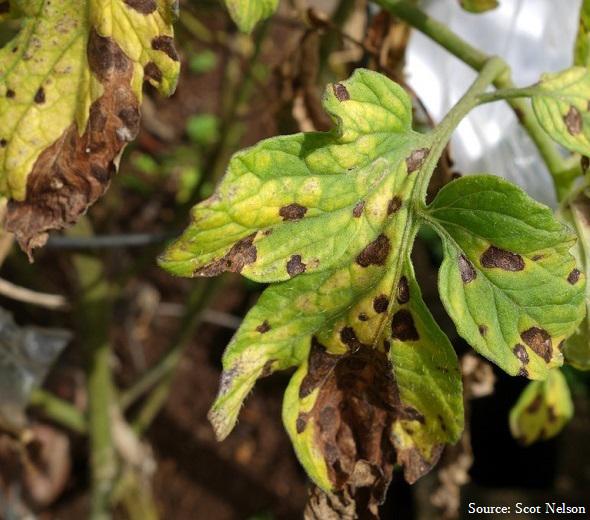
12. Septoria Leaf Spot
- What it looks like: After the plants begin to develop tomatoes, the lower leaves break out in yellow spots. Within the yellow spots, dark gray centers with dark borders appear. Black dots appear in the center of the spots. Foliage dies and falls off.
- What causes it: A fungus called Septoria lycopersici that infects foliage.
- What to do about it: Avoid watering tomatoes from the top, as the spray can force the spores developing on the leaves back into the soil and continue the disease cycle.
13. Fusarium Wilt
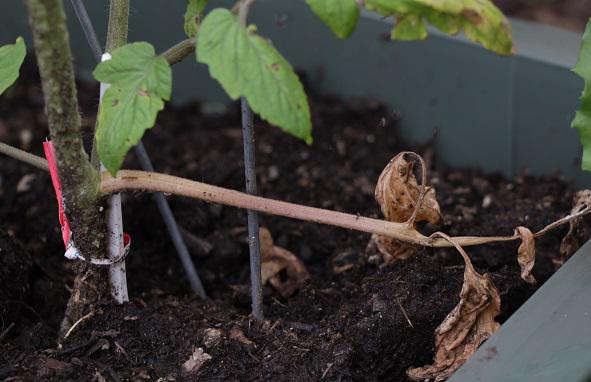
- What it looks like: Your tomato plants look fine, when suddenly, they start to wilt. At first, only one side may be affected, but then the whole plant is wilting. You water them, and the problem gets worse. Within a day or two, the plant is dead!
- What causes it: A nasty fungus called Fusarium oxysporum f.sp. lycopersici attacks the vascular system of the plant, roughly equivalent to a human’s veins. The fungus destroys the xylem tubes, which transport water and nutrients up from the roots and into the leaves.
- What to do about it: In the case of fusarium wilt, the best defense is a good offense. Rotate your crops so tomatoes aren’t planted in the same section of the garden each year. Purchase wilt-resistant varieties if you’ve lost tomatoes to wilting diseases in the past since the fungus can overwinter in garden and lawn soils.
14. Verticillium Wilt
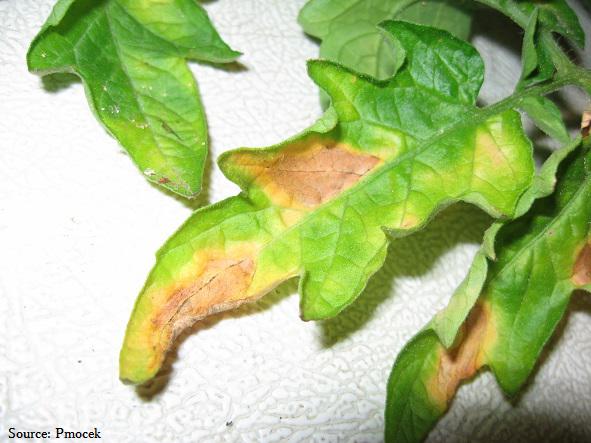
- What it looks like: Yellow blotches appear on the lower leaves. As the blotches spread, the veins in the leaves turn brown. After the leaves turn brown, they fall off. The disease progresses up the stem until the plant is stunted.
- What causes it: A fungus that lives in the soil, Verticilliurn albo-atrum, attacks the roots and travels up the xylem tubes with water. It then prevents the normal flow of water and nutrients to the leaves.
- What to do about it: Once plants are infected, there isn’t much you can do to treat Verticillium wilt. Rotate your crops, because the fungus can live for long periods in the soil and even live among weeds such as ragweed. Choosing wilt-resistant varieties to plant is the best way to prevent Verticillium wilt.
15. Viral Diseases
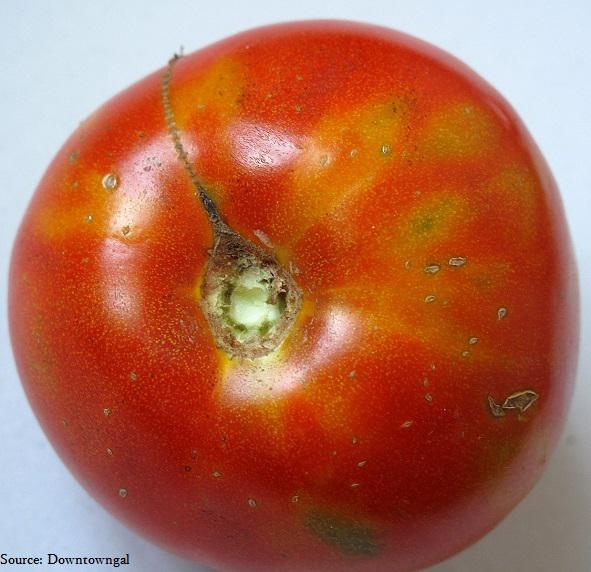
- What they look like: Viral diseases mainly attack the tomatoes themselves. You might find black spots on tomatoes or weird stripes on them. Don’t confuse signs of disease for just how some heirloom tomatoes look with natural stripes.
- What causes them: Many of these viruses spread when plants are stressed by heat, drought, or poor soil.
- What to do about them: If you’ve read through all of these tomato problems and think your tomatoes may be suffering from a viral disease, spray your tomato plants with neem oil. Good soil management and using organic fertilizer for tomatoes helps keep your plants healthy, which can help them naturally resist viruses better.
Leave a comment below or send us an email to ask questions: doomsdateprepper@aol.com


Comments
Post a Comment